Service Robotics — Application Sectors

A structured reference of sector-based deployment contexts in service robotics, aligned with international reporting practice.

The industry structure is crucial

Service robotics is defined less by technology than by context of use. Unlike industrial automation, service robots are deployed across heterogeneous environments with distinct operational constraints, safety requirements, interaction patterns and economic drivers.

For this reason, international reporting applies application-based classification to ensure statistical comparability over time and across regions. The reference framework for this classification is defined by the International Federation of Robotics (IFR) ↗ in its World Robotics – Service Robots methodology.

The IFR framework groups service robots by reported application classes for unit-based market analysis. These classes serve statistical purposes and are designed for longitudinal consistency rather than editorial or operational modeling.

This page follows the IFR classification as its quantitative reference, while applying an operational sector structure for editorial clarity. Sectors are therefore grouped by shared deployment environments, functional demands and governance conditions, even where IFR reporting categories differ in granularity.
Logistics and Warehousing

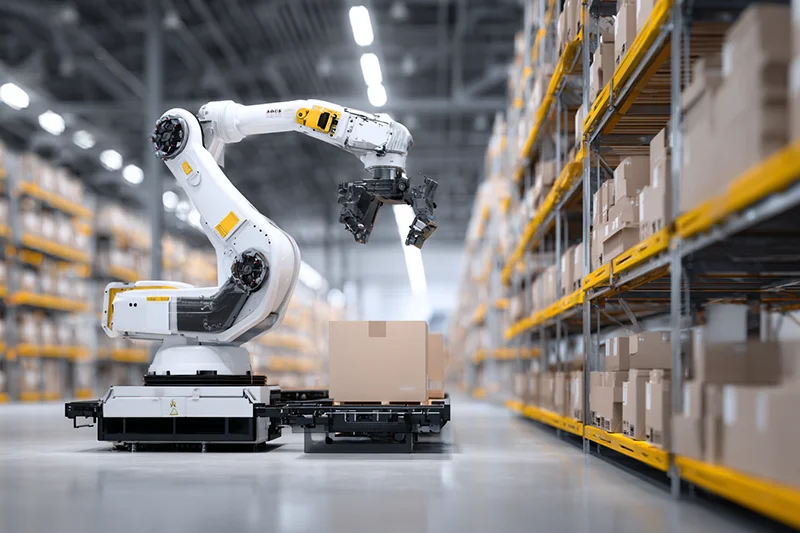
Logistics is the largest application domain for professional service robots. Systems in this sector handle internal transport, material movement and order flow within warehouses, distribution centres and production-adjacent environments.

Typical deployments include autonomous mobile robots and automated guided vehicles operating in structured but dynamic spaces. High task repetition, continuous operation requirements and labour scarcity make logistics the primary entry point for large-scale service robot deployment.

Logistics and warehousing robotics

Hospitality and Retail

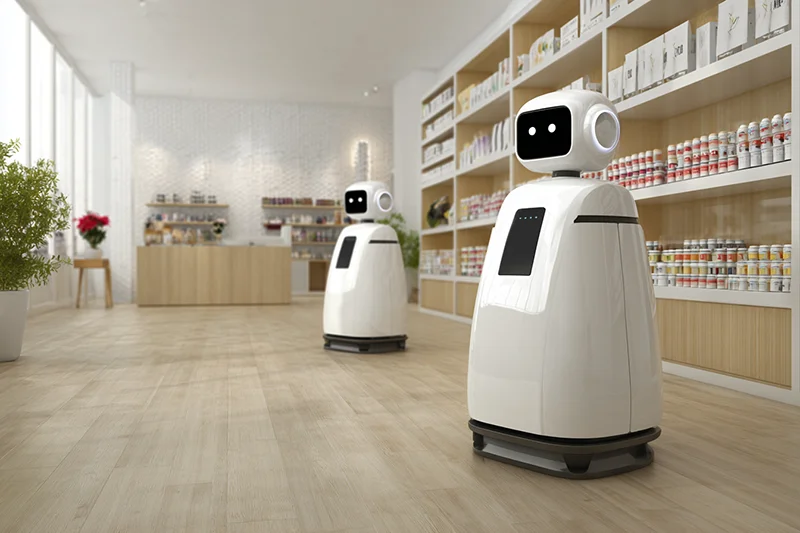
Service robots in hospitality and retail operate in public-facing environments where interaction with customers and staff is central. Common deployments include delivery robots, navigation and information systems, and automated service units.

This sector places particular emphasis on human–robot interaction, as acceptance, predictability and non-intrusive behaviour directly influence operational success.

Hospitality and retail robotics

Healthcare and Care Environments (≠ Medical Robots)

Healthcare represents one of the most sensitive application domains for service robotics. Robots support hospital logistics, disinfection, rehabilitation, patient handling and non-invasive care workflows.

Deployment in this sector is closely tied to regulatory approval, safety certification and clinical validation. Operational reliability and safety margins are decisive, as robots interact with vulnerable individuals and critical medical processes.

Healthcare amd care environments (≠ medical robots)

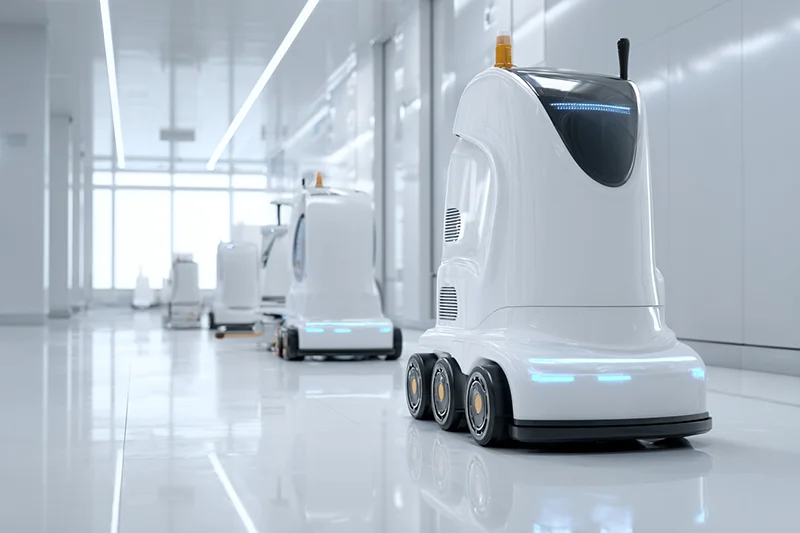
Professional Cleaning and Facility Operations

Professional cleaning is a core application domain for service robotics, particularly in large-scale public, commercial and institutional environments. Typical deployments include floor-cleaning robots and automated disinfection systems operating in facilities such as airports, hospitals, offices and transportation hubs.

These systems are designed for continuous operation across wide surface areas, reducing manual labour and supporting hygiene and infection-control standards. Deployment focuses on reliability, coverage consistency and integration into facility management workflows.

Professional cleaning robots and facility oprerations

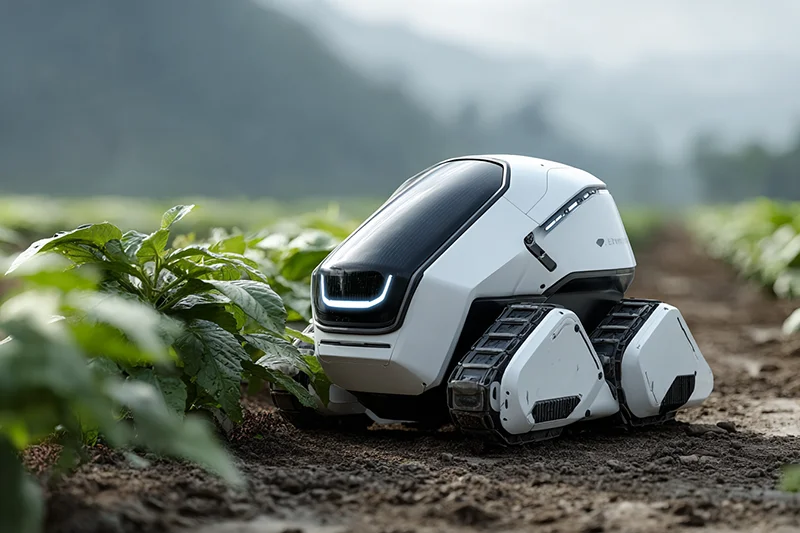
Agriculture and Outdoor Operations

Agricultural service robots address labour-intensive tasks in outdoor and semi-structured environments. Applications include milking systems, harvesting robots, crop monitoring platforms and autonomous field inspection.

These systems prioritise robustness and autonomy over speed and demonstrate how service robotics extends beyond controlled indoor environments into complex real-world contexts.

Agriculture and outdoor operations

Security and Inspection

Security and inspection robots are deployed where continuous monitoring or hazardous exposure makes human presence inefficient or unsafe. Applications include patrol robots, infrastructure inspection platforms and hazard detection systems.

While smaller in volume than logistics or hospitality, this sector plays a key role in infrastructure resilience and safety-critical operations.

Security and inspection robots

Domestic and Personal Environments (Consumer Context)

Domestic service robots address everyday tasks in private environments, such as cleaning or basic assistance. Consumer deployments are typically reported separately from professional service robotics.

They are referenced here for contextual completeness, as they share core technical characteristics with professional service systems.

Domestic and personal environments (consumer context)

Top IFR-Reported Applications for Professional Service Robots (Units Sold)

The chart below shows the top application areas for professional service robots ranked by units sold in 2024, based on International Federation of Robotics (IFR) reporting. The figures reflect relative adoption volume rather than market value, economic importance or long-term strategic relevance of individual applications.

This representation follows the IFR’s reporting logic and does not reflect the editorial sector structure applied elsewhere on this page.

Interpretation note

IFR application categories are used strictly as reported. No re-classification, aggregation or cross-sector mapping has been applied.

Transportation and Logistics 52.0%
Hospitality (Food Service, Guidance, Telepresence) 21.0%
Professional Cleaning (Floor, Disinfection) 13.0%
Agriculture (Field Robotics, Milking, Livestock) 10.0%
Security (Search & Rescue) 1.0%
Other (Inspection, Construction, Search and Rescue) 3.0%

Data Source: International Federation of Robotics (IFR), World Robotics 2025 Service Robots report (October 2025). Percentages calculated from 2024 global deployment data.
Note: Medical robots are reported by IFR as a separate category and are not included in professional service robot distribution figures.

Service Robotics Market – Size, Growth, Structure →

Cross-Sector Patterns

Despite differences in environment and task structure, service robotics applications share recurring characteristics.

Across all sectors, systems operate in human environments, require predictable behaviour, and depend on robust navigation and decision-making.

These shared characteristics form the basis for the evaluative concepts described on the Core Concepts page →