A Service Robot is

a programmed actuated mechanism with a degree of autonomy, capable of moving within its environment to perform useful tasks for humans or equipment, excluding industrial automation applications.

(§2.6) Canonical definition based on ISO 8373:2021 — Robots and robotic devices — Vocabulary

Service Robotics

An independent, vendor-neutral reference documenting service robotics as a technical and economic field

Scope and Purpose

This site defines service robotics as a distinct technical and economic field. Its scope is limited to structural description, classification, and documentation of how service robots are developed, evaluated, and deployed.

Covered dimensions include market structure, sectoral adoption, evaluation principles, and relevant technical and regulatory standards. Product comparison, vendor positioning, and speculative projections are intentionally excluded.

Definition and Delimitation

Service robots operate outside industrial production environments. They perform tasks in contexts shaped by human presence, interaction, and variability rather than by controlled automation settings.

The field spans multiple sectors, including logistics, healthcare, hospitality, inspection, and domestic environments. These deployments are not defined by form factor, but by shared requirements for autonomy, interaction capability, and operational reliability.

Humanoid and AI-driven robotic systems are treated within this framework as interaction-oriented configurations inside service robotics, not as a separate technological domain. Their relevance lies in interface behavior and task adaptability, rather than in fundamentally different system architectures.
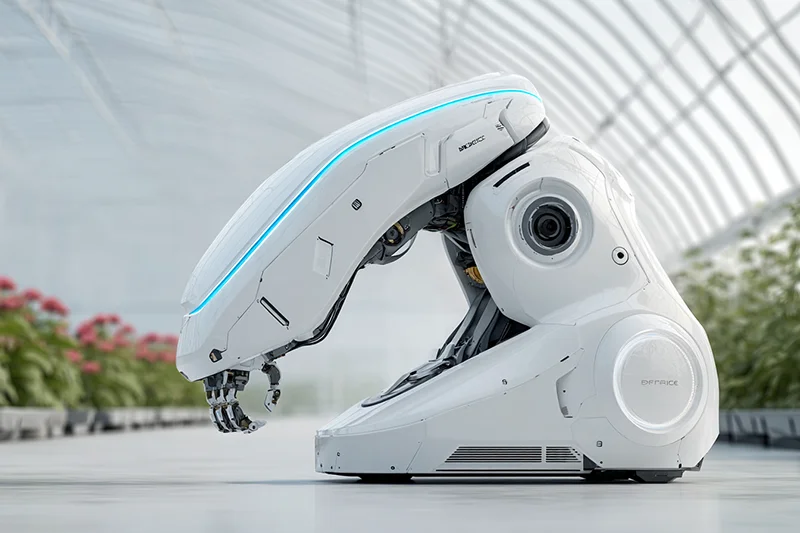
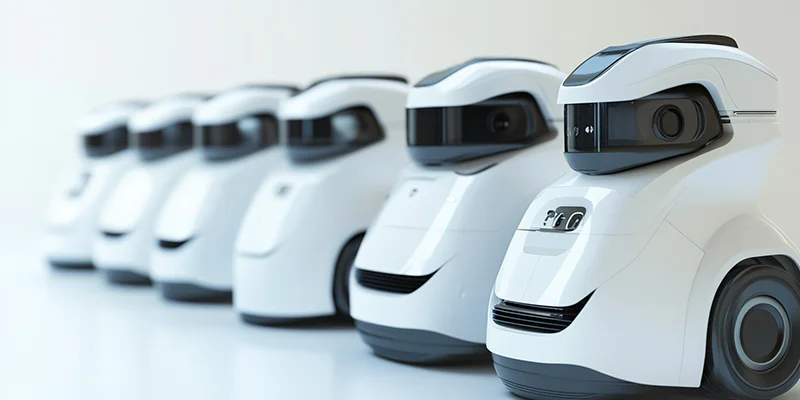
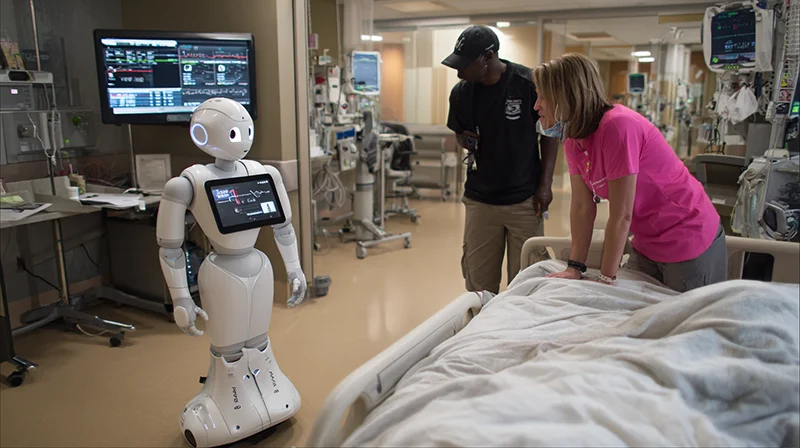
More details of the growing market →

Evaluation Pillars

Service robots are assessed along recurring, cross-sector evaluation dimensions. These pillars describe how systems are analysed in operational practice, regulatory review, and comparative reporting. They function as analytical lenses rather than as categories, features, or performance claims.

Human–Robot Interaction (HRI)

The interaction dimension covering communication, responsiveness, and behavioural predictability of autonomous systems in environments shared with humans.

Autonomous Task Execution

The system's ability to perceive situational inputs, plan actions, and execute tasks autonomously with limited or no continuous human control.

Operational Reliability

The degree of technical robustness, stability, and safety consistency required for sustained operation under real-world conditions.


The idea of different core concepts →

Application sectors

Within service robotics, sectors describe recurring environments of use in which autonomous systems are deployed. They reflect stable operational and institutional contexts, not device categories or product classes.

Typical sectors in service robotics

Logistics and Warehousing

Autonomous transport, sorting, and handling of goods in warehouses, distribution centres, and production-adjacent logistical environments.

Hospitality and Retail

Service-oriented deployments in public and customer-facing settings, including delivery, guidance, and information assistance.

Healthcare and Care Environments (≠ Medical Robots)

Non-invasive care, logistics, rehabilitation, and support systems operating in hospitals and care facilities under strict safety and governance constraints.

Professional Cleaning and Facility Operations

Large-scale cleaning and disinfection systems deployed in public, commercial, and institutional facilities, integrated into facility management workflows.

Agriculture and Outdoor Operations

Outdoor robotic systems for harvesting, monitoring, and other labour-intensive agricultural tasks in semi-structured natural environments.

Security and Inspection

Autonomous inspection, patrol, and hazard detection systems used in infrastructure, industrial, and safety-critical environments.

Domestic and Personal Environments (Consumer Context)

Consumer-facing systems for household maintenance and personal assistance, referenced for contextual completeness within service robotics.

Across sectors, service robotics is characterised by operation in human-centred environments, where autonomy, predictability, and controlled system behaviour are essential.


Detailed sector definitions and classification rationale →

Evidence and Editorial Basis

Sources and Verifiability

Statements and quantitative references on this site are based on publicly accessible industry reports, standards documents, and institutional publications. Numerical data is contextualised by source and publication year.

Core statistical material is drawn from recurring publications issued by the International Federation of Robotics and comparable institutional bodies.

Editorial Delimitation

The content scope is restricted to technical definitions, economic structures, sectoral deployment patterns, and regulatory or normative frameworks relevant to service robotics.

Product-specific claims, vendor comparisons, and promotional narratives are outside the scope of this site. Where reference frameworks are required, they are derived from standards organisations such as ISO and IEEE or equivalent bodies.

Content is revised only when underlying definitions, standards, or classification models change. No continuous news coverage or trend reporting is performed.

Worldmap

See details on special features in service robotics →

Reference Structure

This site is organised as a structured reference. Content is arranged by analytical layer rather than by narrative flow, topical news, or editorial chronology.

  • Core Concepts define the fundamental technical, operational and evaluative principles used to assess service robotics across all contexts.
  • Sectors describe the environments of use in which service robots are deployed across industries and institutions.
  • Trust and Safety Standards consolidate normative, regulatory and risk-related frameworks governing the responsible deployment of service robots in environments shared with humans.
  • Interfaces describe the system-level architectural layers that enable compliant operation, governance, scalability and integration under these trust and safety conditions.
  • Market documents economic scale, adoption patterns and growth dynamics resulting from real-world deployment.

Each layer is maintained independently to preserve semantic clarity and to enable consistent cross-referencing between evaluation principles, application contexts, normative constraints, system architecture and economic outcomes.

Disinfection robot